

DNS Intelligence
DNS Intelligence, in the context of cybersecurity, is the process of monitoring, collecting, and analyzing data from the Domain Name System (DNS) to identify potential threats, malicious infrastructure, and digital risks associated with an organization. It focuses on the crucial role DNS plays as the "phonebook" of the internet, making it a valuable source of information for both defenders and attackers.
Key Applications of DNS Intelligence
DNS data reveals relationships among domain names, IP addresses, and technologies, helping security teams build a holistic view of the attack landscape.
Threat Hunting and Blocking:
Identifying Malicious Domains: Security analysts use DNS query patterns to detect domains associated with command-and-control (C2) servers, phishing campaigns, or malware distribution. High volumes of failed DNS lookups, for example, can indicate a domain is being used as part of a Fast Flux network.
Predictive Blocking: By analyzing newly registered domains (NRDs) that use suspicious keywords or mimic legitimate brands (typosquatting), DNS intelligence can predict and block malicious activity before it becomes operational.
External Attack Surface Management (EASM):
Asset Discovery: Analyzing DNS records (like
A,CNAME,MX, andTXT) for an organization's primary domain can uncover all its associated digital assets. This includes subdomains, mail servers, and external third-party services that the organization uses.Infrastructure Mapping: It helps map the entire technology stack by identifying vendors and cloud providers used in CNAME records or specific SPF/TXT records. This highlights which external services are part of the security perimeter.
Digital Risk and Brand Protection:
Phishing Detection: Monitoring for domain permutations (variations of an organization’s brand name) and identifying those with active mail records (
MXrecords) helps proactively detect and shut down phishing sites targeting customers or employees.Domain Takeover Prevention: Analyzing
CNAMErecords that point to dormant or unclaimed third-party services (dangling DNS) prevents attackers from taking over a subdomain to host malicious content.
Forensics and Incident Response:
Historical Data Analysis: Reviewing past DNS resolution data (known as passive DNS) can help incident responders trace the activity of a compromised machine, identify where a malware sample communicated, and find other related malicious domains used by the same threat actor.
By providing an outside-in view of an organization's infrastructure and monitoring the creation of new, potentially hostile domains, DNS intelligence is a critical component for anticipating and responding to external threats.
ThreatNG, as an external attack surface management solution, directly addresses DNS Intelligence by proactively collecting and analyzing DNS-related data to uncover digital risks from an unauthenticated, outside-in perspective.
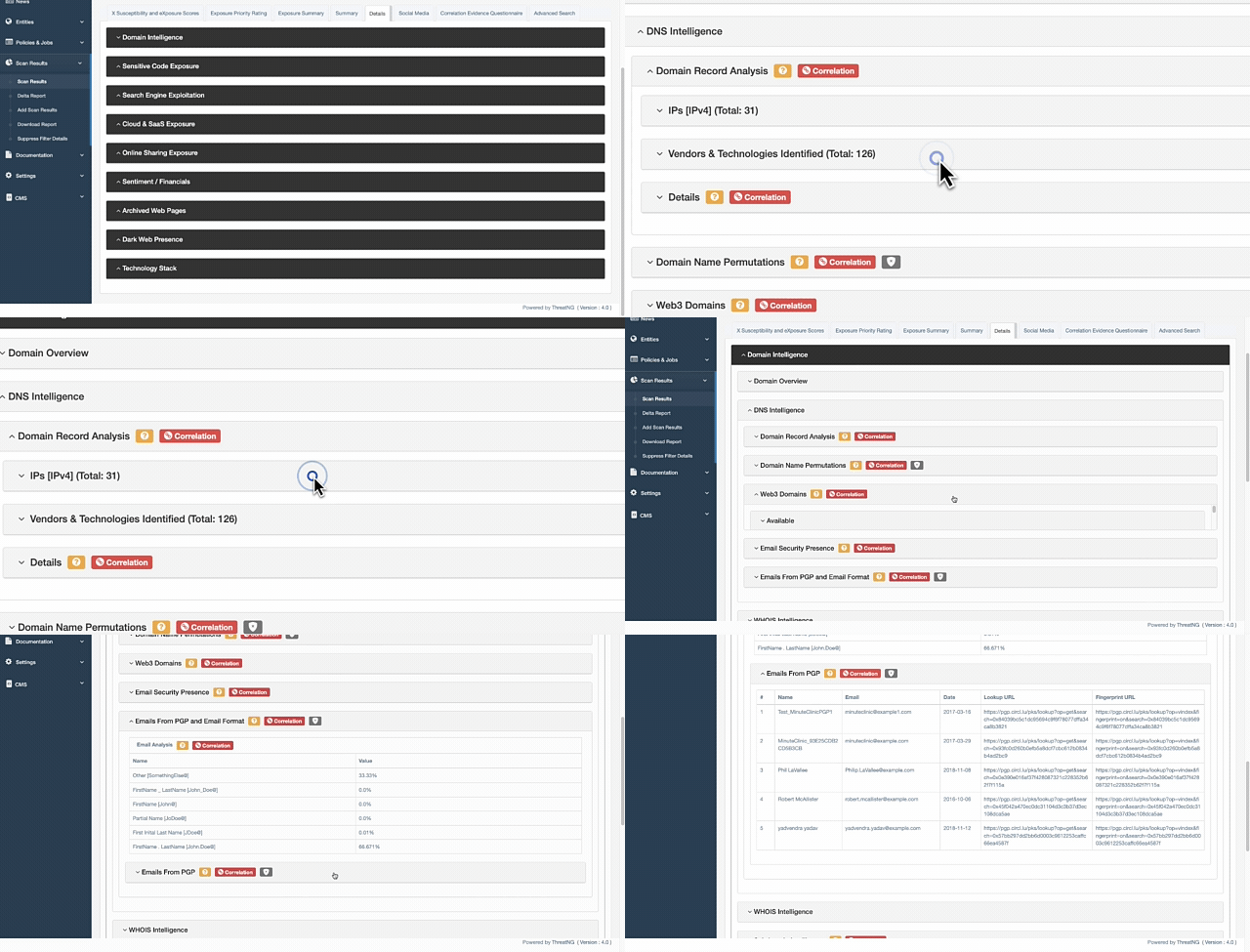
ThreatNG's Role in DNS Intelligence
External Discovery and Continuous Monitoring
ThreatNG performs purely external, unauthenticated discovery to map an organization's entire digital footprint, which relies heavily on DNS information. The platform then Continuously Monitors the external attack surface for changes, ensuring that newly created or altered DNS records—which could signal malicious activity or asset changes—are immediately detected and assessed.
External Assessment and Examples
ThreatNG uses DNS-derived intelligence to calculate several key security ratings:
Subdomain Takeover Susceptibility: This process begins with external discovery to find associated subdomains, followed by DNS enumeration to find CNAME records pointing to third-party services. The system cross-references these against a comprehensive Vendor List (including PaaS/Serverless services like Heroku or Vercel, and Content Management systems like WordPress or Tumblr) to identify CNAME records pointing to inactive or unclaimed resources. This "dangling DNS" state has been confirmed and prioritized as a critical DNS-related vulnerability.
Example: If ThreatNG discovers the CNAME record for
blog.company.compoints to an unclaimed Ghost blog platform and identifies a high-risk DNS misconfiguration that allows a takeover.
BEC & Phishing Susceptibility: This rating relies heavily on DNS intelligence, specifically Domain Name Record Analysis, which includes checking for missing security records such as DMARC and SPF. These records are published via DNS, and their absence makes the organization susceptible to email spoofing (Business Email Compromise or Phishing).
Cyber Risk Exposure: This rating checks for missing DMARC and SPF records within the Domain Name Record Analysis. The absence of these is a direct indicator of a weak email security posture, which is a key component of DNS Intelligence.
Investigation Modules and Examples
The Domain Intelligence investigation module is the primary engine for DNS Intelligence:
DNS Intelligence: This module performs core DNS analysis:
Domain Record Analysis: This uncovers IP Identification, as well as Vendors and Technology Identification used by the domain. This provides a concrete list of the external technologies that the organization is routing traffic to.
Web3 Domain Discovery and Identification: ThreatNG proactively checks the availability and registration status of Web3 domains (like .eth and .crypto) associated with the organization. This helps secure the brand's presence and detect domains that are already taken and could be used for impersonation or phishing schemes.
Example: ThreatNG discovers that the domain
company-security.cryptois already taken, flagging a potential brand impersonation or phishing risk targeting Web3 users.
Domain Name Permutations: This feature directly leverages DNS Intelligence to detect and group manipulations of a domain (such as bit squatting, hyphenation, transposition, and TLD swaps) across various TLDs (such as .com, .tech, .london, .uk). It provides email records and IP addresses for these permutations, identifying which lookalike domains are active and operational for phishing or other malicious use.
Example: ThreatNG identifies that
compnay.com(a transposition) has an active email record, indicating it is a phishing domain that needs immediate remediation.
Email Intelligence: This module is tied to DNS records by assessing Security Presence (presence of DMARC, SPF, and DKIM records).
Intelligence Repositories and Complementary Solutions
Intelligence Repositories (DarCache): While ThreatNG's repositories do not appear to store raw DNS records, they are informed by and inform DNS analysis:
Compromised Credentials (DarCache Rupture): The repository can provide context on compromised accounts associated with domains identified via DNS enumeration, enabling immediate prioritization.
ESG Violations (DarCache ESG): Discovering an organization's third-party vendors via DNS analysis can be cross-referenced with DarCache ESG to uncover potential risks tied to the supply chain infrastructure revealed by the DNS records.
Complementary Solutions:
Security Information and Event Management (SIEM) Systems: ThreatNG can feed its prioritized list of malicious lookalike domains (identified via Domain Name Permutations) into a SIEM. The SIEM can then use this list to search internal logs for any user or system attempting to connect to those confirmed malicious domains, indicating a successful phishing or malware event.
Domain Registrar Services: When ThreatNG identifies a high-risk, available domain name permutation (e.g., a critical brand name TLD-swap like
company.techthat is available), this information can be shared with the organization's domain registrar. The registrar can then automatically register the domain defensively to prevent brand impersonation.Email Security Gateways (ESGs): ThreatNG's report on missing DMARC and SPF records can be used by an ESG vendor. The vendor can quickly configure and deploy the necessary documents into the client's DNS zone to enforce stronger email authentication, immediately reducing BEC susceptibility.
