



Layoff Chatter
The MRI for Your External Attack Surface: Transform Layoff Chatter and Conversational Risk into Predictive Threat Intelligence
Your organization has built a formidable internal digital fortress. Your massive investments in Endpoint Detection and Response (EDR) and Identity and Access Management (IAM) provide an excellent general checkup of your network's baseline health, ensuring internal systems operate within baseline metrics. However, during periods of profound corporate instability, such as workforce reductions, these internal tools are fundamentally blind to outside-in reconnaissance. ThreatNG’s Sentiment and Financials Investigation Module acts as an MRI specifically searching for the external risks your internal stack misses. By monitoring conversational risk, layoff chatter, and negative public sentiment, we bridge the gap between Human Risk Management (HRM) and External Attack Surface Management (EASM). Stop waiting for a disgruntled insider or an opportunistic attacker to exploit a forgotten asset; gain the unshakeable confidence to predict exactly where and when your digital perimeter will be tested during your most vulnerable corporate transitions.
Master the Human Element of EASM: Predict Exploits, Defend Your Supply Chain, and Eliminate Alert Fatigue

Transform a "Pile of Bricks" into a Strategic Blueprint
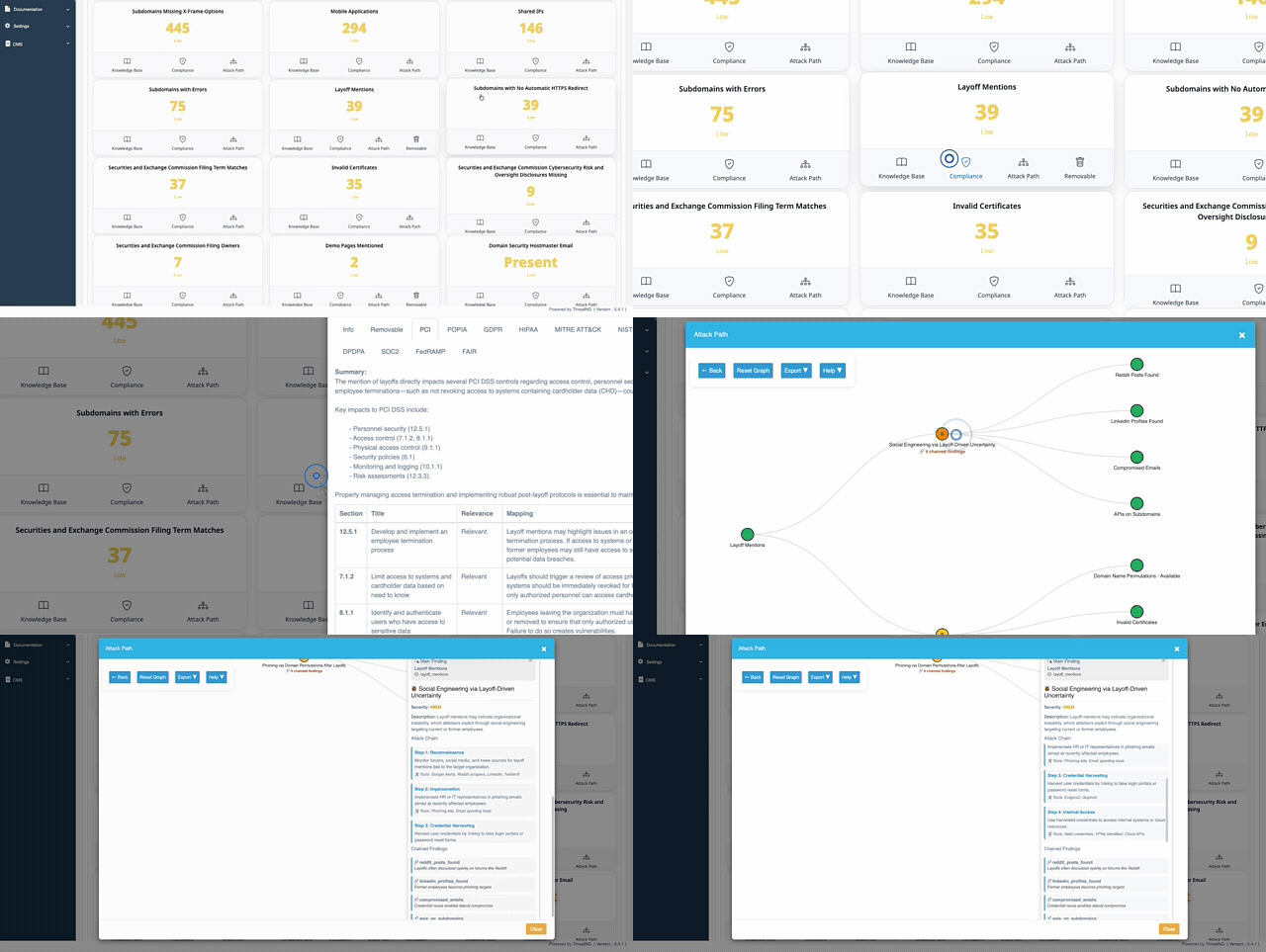
Traditional EASM tools and global threat intelligence feeds overwhelm your Security Operations Center with a disconnected list of thousands of vulnerabilities, creating severe alert fatigue and burnout. ThreatNG shifts your team from chaotic reactivity to calm clarity through our proprietary DarChain Attack Path Intelligence engine, which visually maps isolated technical findings into clear, multi-stage exploit narratives. By correlating public layoff mentions directly with technical flaws, such as a dangling DNS record susceptible to a subdomain takeover, we give Enterprise CISOs the exact blueprint for how attackers plan to strike today, operationalizing Continuous Threat Exposure Management (CTEM) without adding another dashboard to manage.
Conquer the "Contextual Certainty Deficit" to Protect Your Executives and Supply Chain
A technical gap only becomes an active threat when a motivated human decides to exploit it. Today, sophisticated cybercriminals are engaging in the "regulatory weaponization" of SEC filings, scraping the EDGAR database for verified financial data to craft hyper-personalized Business Email Compromise (BEC) and whaling lures. ThreatNG actively monitors this conversational risk alongside statutory workforce reduction indicators. This predictive intelligence empowers Heads of Third-Party Risk Management (TPRM) to preemptively identify distressed vendors undergoing mass layoffs and allows security teams to protect executives from targeted social engineering campaigns before the offboarding process even begins.
Eliminate the SOC's "Hidden Tax" with Legal-Grade Attribution
Security analysts at Managed Security Service Providers (MSSPs) and enterprise SOCs waste countless weekend hours chasing false positives generated by legacy security rating agencies scoring unowned "ghost assets". ThreatNG acts as your unassailable single pane of truth by delivering Legal-Grade Attribution. Our Context Engine™ mathematically verifies asset ownership before an alert is ever generated, completely eliminating the hidden tax of false positives. Operating entirely agentless with zero internal connectors required, you can instantly discover shadow SaaS and unmanaged IT, ensuring your team only spends their budget and sanity securing verified assets.

Frequently Asked Questions: Navigating Human Risk and External Exposures
-
Conversational risk refers to the measurable cybersecurity threat created by public sentiment, employee discussions, negative news, and layoff chatter. While traditional EASM tools focus purely on technical flaws—such as an open port or database—conversational risk intelligence identifies when those technical gaps are most likely to be actively weaponized. For example, if an organization is experiencing a workforce reduction, the resulting conversational risk signals a high probability of "revenge-type" insider threats or opportunistic external phishing campaigns. ThreatNG's Sentiment and Financials Investigation Module tracks this conversational risk to provide true contextual certainty.
-
During a workforce reduction, organizations face severe, compounded risks from both disgruntled insiders and external threat actors. Departed or anxious employees with privileged access may intentionally leave digital backdoors open, steal sensitive intellectual property, or neglect to patch vulnerabilities due to plummeting morale and financial stress. Simultaneously, external attackers actively monitor this organizational instability. They use the chaos of the offboarding process as the perfect operational window to deploy ransomware or launch highly targeted social engineering attacks impersonating your HR department.
-
Regulatory weaponization occurs when sophisticated cybercriminals scrape mandatory public disclosures, such as the SEC's EDGAR database, to gather verified financial data. Attackers collect specific details from Form 4 (equity swaps) and Form 8-K (material events) and synthesize them with public layoff chatter. This allows them to craft hyper-personalized Business Email Compromise (BEC) and whaling lures that targets are highly likely to trust, as the emails reference real-world, verified financial transactions.
-
A dangling DNS record occurs when a cloud-hosted service (such as a third-party marketing portal) is deleted or retired, but the DNS record pointing to it is not removed. During periods of corporate restructuring or layoffs, these forgotten assets are frequently overlooked. Attackers actively scan for these misconfigurations, claim the abandoned resource, and execute a subdomain takeover. Because the subdomain operates under your legitimate, trusted brand name, attackers can host highly convincing phishing pages or distribute malware while completely bypassing traditional security filters.
-
Organizations can uncover hidden assets through agentless, unauthenticated external discovery. ThreatNG utilizes a patented recursive discovery process that evaluates an organization entirely from the "outside-in," mimicking the exact reconnaissance methods of an external adversary. Because it requires zero internal connectors, API keys, or permissions, it maps the digital perimeter with zero operational friction, effectively identifying the exact shadow IT, rogue cloud buckets, and unsanctioned SaaS applications that internal network tools fundamentally miss.
-
Legacy security silos often overwhelm security teams by dumping a disconnected "pile of bricks"—thousands of unverified alerts that cause severe analyst burnout. ThreatNG operationalizes CTEM by delivering the "Blueprint". First, the Context Engine™ provides Legal-Grade Attribution, mathematically verifying asset ownership to eliminate false positives before an alert is ever generated. Then, the DarChain hyper-analysis engine correlates technical findings with business context—such as layoff chatter—to map isolated vulnerabilities into highly visual, multi-stage exploit chains. This ensures your team fixes the exact exposures attackers intend to use today.