



Website Control File Exposure
Stop Taping Your Architectural Blueprints to the Front Door: Secure Your Digital Perimeter with ThreatNG
In the complex world of enterprise security, the most dangerous vulnerabilities are often not hidden behind encrypted firewalls, but sitting in plain text for any reconnaissance bot to read. Your website control files, specifically robots.txt and security.txt, serve as the master schematics of your organization’s digital infrastructure. When these are left unmonitored, you are inadvertently handing adversaries a step-by-step roadmap to your most sensitive, unauthenticated assets. ThreatNG changes the narrative by providing Zero-Connector Blueprint Diagnostics, an agentless approach that audits your perimeter exactly as an attacker would, ensuring you have the contextual certainty to protect your organization before a potential breach becomes a reality.
Why CISOs and Risk Officers Choose ThreatNG for Blueprint Defense

Move Beyond Obscurity to Contextual Certainty
Stop relying on the dangerous myth of security through obscurity, in which developers "hide" sensitive directories such as /admin-portal/ or /db-backups/ in robots.txt. ThreatNG instantly highlights these exposed paths, replacing probabilistic scanning with deterministic proof of what your IT team is actually broadcasting to the open internet.
Establish a Governance Lifeline for Vulnerability Disclosure
A missing or outdated security.txt file is more than a minor technical oversight; it is a massive governance gap that forces ethical researchers to disclose vulnerabilities publicly on social media. ThreatNG audits the validity of your disclosure channels, protecting your brand reputation and maintaining regulatory compliance.
Generate Legal-Grade Forensic Evidence Packages
When adversaries scrape your blueprints or typosquat your domains to intercept reports, you need more than alerts; you need the power to act. ThreatNG compiles your external reconnaissance data into Forensic Evidence Packages, providing the undeniable, deterministic proof required for your legal and takedown services to execute a frictionless, guaranteed strike against the adversary.
How ThreatNG Secures Your Digital Perimeter
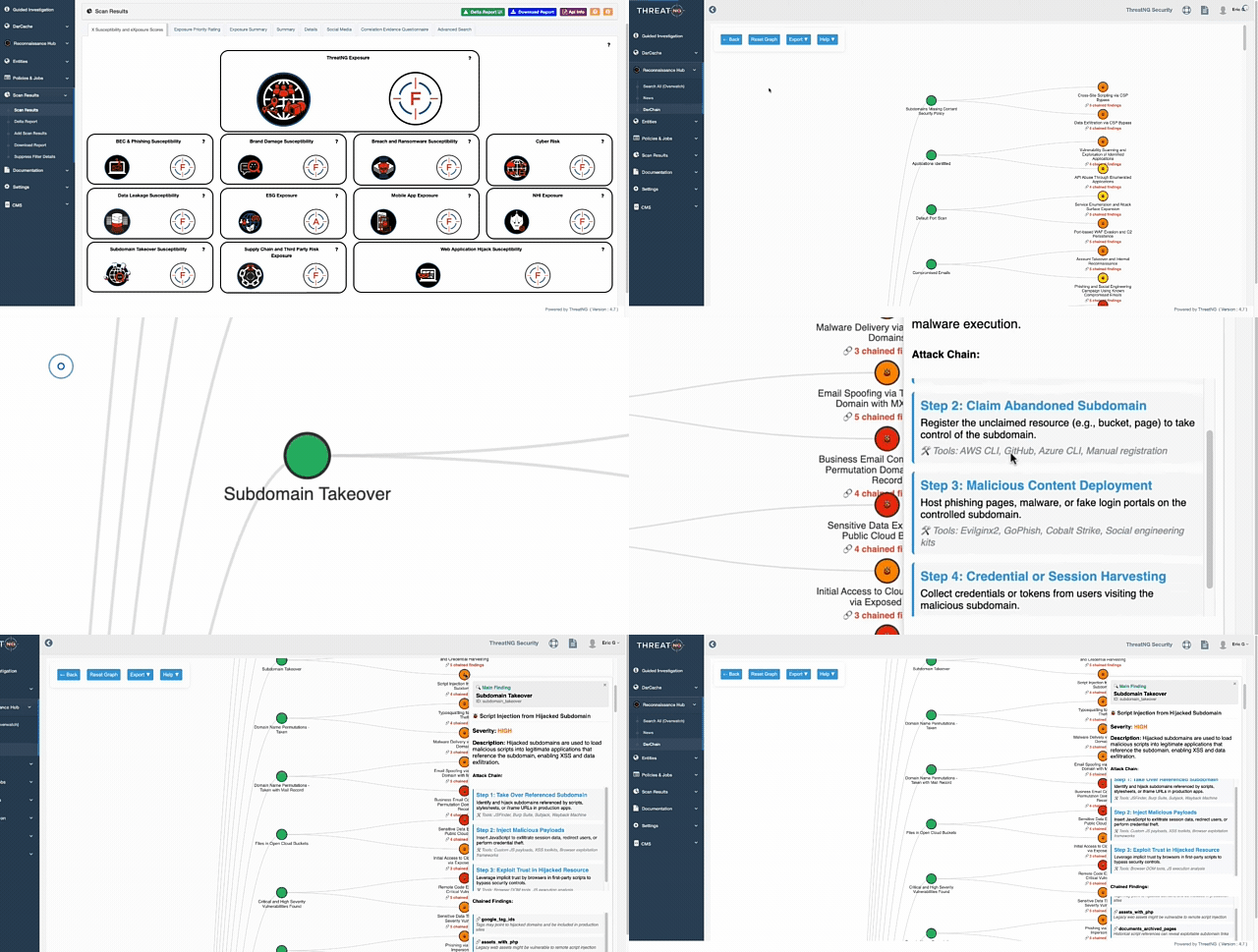
ThreatNG operates as the ultimate unauthenticated External Scout, reading the exact maps your IT teams have published to the public internet. By using the DarChain Attack Path Intelligence Methodology, we connect these seemingly innocuous text files directly to your critical threat vectors, helping you bridge the gap between simple configuration errors and potential catastrophic data exfiltration.
Unlike legacy internal tools that require heavy software agents or complex API integrations, ThreatNG works from the outside looking in. This zero-connector approach allows you to audit not just your own assets, but your third-party supply chain and M&A targets, exposing hidden technical debt and unauthenticated portals that aren't mentioned in any official document.

Mitigate Attack Surface with robots.txt Insights
The seemingly innocuous robots.txt file, designed to guide search engine crawlers, can inadvertently expose critical information that attackers exploit. Meticulously analyzing this file can uncover hidden vulnerabilities and potential attack vectors. Certain directory listings, like those for secure, user, or administrative areas, inadvertently flag high-value targets. Similarly, revealing shopping carts, email structures, or API endpoints can provide attackers with blueprints for data theft, phishing campaigns, or system compromise. Through a detailed examination of these entries, we gain crucial insights into your attack surface, enabling proactive security measures and reducing your organization's digital risk.
Shopping Cart Directories
These directories often contain sensitive transaction data. Disclosing them can highlight areas where attackers might find vulnerabilities related to payment processing or customer information. This makes them a high-priority target for data theft and fraud.
Emails
Disclosing email addresses or related paths directly in robots.txt is a severe security risk. Attackers can easily collect these for spam, phishing, or targeted attacks. This increases the likelihood of successful social engineering and data breaches.
API Directories
Exposing API endpoints in robots.txt can reveal sensitive data or functionalities. Attackers can use these endpoints to perform unauthorized actions or extract data. This exposes potential vulnerabilities in API security and authentication.
Secure Directories
These entries indicate areas intended to be protected. If an attacker identifies them, they may focus efforts on finding vulnerabilities within those specific, supposedly secure, locations. This exposes potential weaknesses in access control and authentication.
Email Directories
Exposing these can reveal internal email structures and potentially sensitive communication paths. Attackers can use this to target specific individuals with phishing or spear-phishing attacks. This significantly heightens the risk of social engineering and data leakage.
Admin Directories
These are critical targets because they often provide access to administrative functions. Revealing their location makes them a prime target for brute-force or exploit-based attacks. This drastically increases the risk of system compromise and unauthorized control.
User Directories
Listing these reveals the structure of user accounts, potentially enabling enumeration attacks. Attackers can use this information to guess usernames or locate sensitive user-specific data. This increases the risk of unauthorized access and data breaches.
Ticket Systems
Listing these reveals the location of internal support or issue-tracking systems. Attackers can potentially gain insight into internal operations and vulnerabilities by analyzing ticket data. This exposes potential weaknesses in internal processes.
Development Resources Directories
Exposing these directories can reveal unfinished or vulnerable code. Attackers can use this information to identify and exploit weaknesses in the development process. This increases the risk of code injection and other web-based attacks.
Improving Vulnerability Management via security.txt Insights
The security.txt file serves as a cornerstone for effective vulnerability management, providing a standardized way for organizations to communicate their security practices and preferences. By meticulously analyzing the information contained within, we can streamline the reporting process, foster stronger relationships with security researchers, and ultimately enhance our overall security posture. Each field within this file contributes to a more transparent and efficient vulnerability management ecosystem, from contact information to encryption details and policy guidelines. This section delves into the specific insights gained from each security.txt field, demonstrating how they collectively contribute to a robust and responsive security framework.
Encryption
Secure communication of sensitive vulnerability details is enabled, protecting them from interception. Confidence is built in the reporting process, encouraging researchers to share critical findings. Potential data leaks are prevented.
Bounty
Information about bug bounty programs is provided, incentivizing researchers to find and report vulnerabilities. A continuous flow of vulnerability reports is encouraged, improving the organization's security posture. The number of reported vulnerabilities can increase.
Contact
A direct channel allows security researchers to report vulnerabilities, reducing time to remediation. Reports reach the appropriate security team, minimizing the risk of delayed responses or missed critical issues. Prompt vulnerability management is essential.
Acknowledgments
Researchers' contributions are publicly recognized, fostering a positive relationship and encouraging further collaboration. A commitment to transparency and security is demonstrated, building trust with the security community. The organization's reputation can be positively impacted.
Canonical
Security tools and researchers access the correct version of the security.txt file. Confusion is prevented, and reports are directed to the appropriate contact. The correct reporting process is clarified.
Policy
Guidelines for responsible disclosure are established, reducing ambiguity and potential legal issues. Trust is fostered between the organization and security researchers, encouraging collaboration. A proactive security posture is promoted.
Hiring
Security-related career opportunities are promoted, attracting skilled professionals to the organization. A strong security team is built, improving the organization's overall security posture. Internal security can be improved.
Preferred-Languages
Effective communication is facilitated between researchers and the organization. Misunderstandings are reduced, and reports are processed efficiently. The efficiency of the vulnerability reporting process is improved.
Interoperability: Powering the Intelligence Engine
The intelligence harvested by the Website Control Files Module serves as a crucial connective layer, seamlessly empowering ThreatNG’s overarching enterprise use cases:

Rapidly expands your mapped perimeter by discovering unlinked directories, staging servers, and hidden API endpoints exposed via robots.txt.

Continuously monitors your external blueprints to ensure sensitive administrative pathways are not leaked to reconnaissance bots.

Brand Protection
Prevents severe reputational damage by ensuring researchers have a secure, validated channel (security.txt) to report vulnerabilities privately, rather than disclosing them publicly on social media.
Cloud & SaaS Exposure Management
Identifies forgotten cloud storage buckets or third-party SaaS portals that developers have attempted to hide from search engines, with zero internal cloud configuration required.


Due Diligence
The ultimate structural inspection tool. ThreatNG reads the target company's control files to map their true digital footprint, exposing hidden technical debt, unauthenticated portals, and broken governance lifelines before the acquisition is finalized.

Third-Party Risk Management
Enables Risk Officers to audit external vendors from the outside looking in, ensuring supply chain partners maintain responsible disclosure channels and do not leak shared architectural data.

Website Control FIle Exposure Frequently Asked Questions (FAQs)
-
Website control files, such as robots.txt and security.txt, are public-facing text files meant to provide instructions to search engines and security researchers. The security risk arises when organizations use them as a "hidden" map for sensitive, unauthenticated infrastructure—such as admin portals or database backups—thereby broadcasting a roadmap directly to threat actors.
-
Legacy internal tools are designed to scan for known software vulnerabilities, often relying on internal agents or authenticated access. They overlook these plain-text files because they do not operate from the outside-in, unauthenticated perspective of an adversary. ThreatNG solves this by using Zero-Connector Blueprint Diagnostics to audit these files exactly as a scout would, without needing administrative credentials.
-
This module provides Contextual Certainty by continuously monitoring your external blueprints to ensure sensitive administrative pathways remain hidden from reconnaissance bots. It audits the presence and validity of security.txt files to ensure you have a functional governance lifeline, preventing minor configuration issues from escalating into public relations or compliance disasters.
-
Without a valid security.txt file, ethical hackers who discover a flaw in your network have no secure, private channel to report it. This governance gap frequently forces well-intentioned researchers to disclose vulnerabilities publicly on social media, resulting in unnecessary reputational damage and legal liability.
-
ThreatNG utilizes the DarChain Attack Path Intelligence Methodology to map the connection between a simple text file exposure and a potential breach. When a threat is identified, the system compiles this information into Forensic Evidence Packages, providing your legal and takedown teams with the deterministic proof necessary to execute a successful, frictionless strike against the adversary.
-
Yes, it is the ultimate structural inspection tool. ThreatNG reads the target company's control files to map their true digital footprint, exposing hidden technical debt, unauthenticated portals, and broken governance lifelines—often before the target even realizes they are broadcasting these risks.
-
Relying on security through obscurity is a fundamental flaw that leaves your architectural blueprints taped to the front door. ThreatNG’s agentless approach provides board-ready visibility and replaces guesswork with actionable intelligence, ensuring you secure your perimeter before an attacker can use your own data against you.

Search Engine Exploitation

Domain Intelligence

Social Media

Sensitive Code Exposure

Cloud and SaaS Exposure

Online Sharing Exposure

Sentiment and Financials

Archived Web Pages

Dark Web

Technology Stack