




Non-Human Identity (NHI) Exposure
Eradicate Invisible Threats: Uncover Hardcoded API Keys and Service Account Sprawl with Legal-Grade Non-Human Exposure (NHI) Security Rating and EASM.
Non-Human Identities (NHI), such as hardcoded API keys, system accounts, and cloud service credentials, are a high-privilege blind spot that exposes your organization to external attack. ThreatNG's dedicated Non-Human Identity (NHI) Exposure Security Rating quantifies the critical nature of this identity sprawl. We use external, unauthenticated discovery to reveal compromised credentials, misconfigured public cloud buckets (AWS/Azure), forgotten SaaS tokens (Slack, GitHub), and exposed development ports (RDP/SSH), providing the Legal-Grade Attribution required to stop adversaries at their initial access point and justify immediate remediation across your entire External Attack Surface Management (EASM) program.

Stop Guessing: Achieve Unassailable Attribution and Certainty
Stop the Attribution Chasm: Gain Legal-Grade Certainty on Every Exposed Non-Human Identity
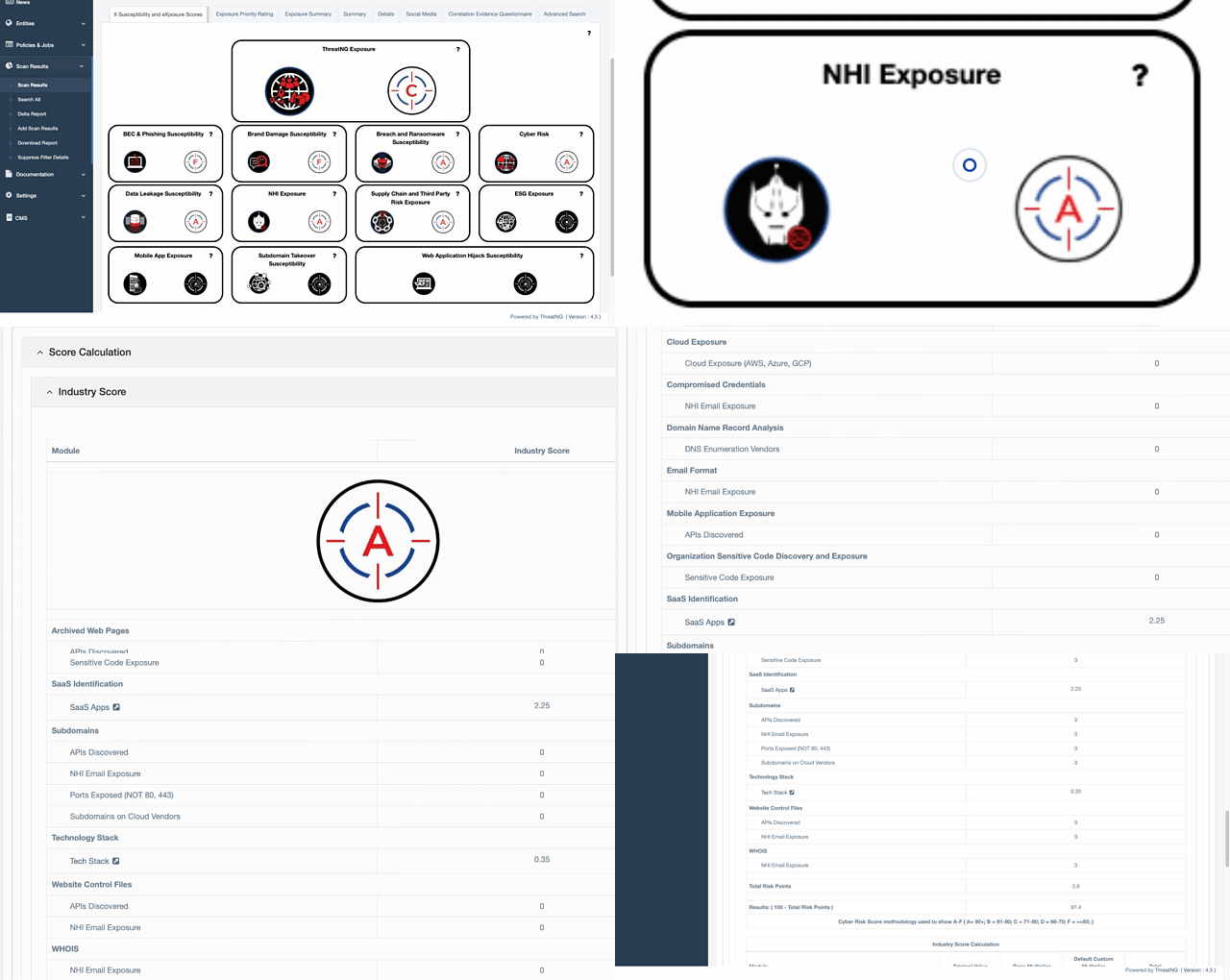
For the CISO, uncertainty regarding the validity and business impact of a finding creates inertia. This benefit promises to deliver absolute confidence in risk data. ThreatNG Veracity™ resolves the "Contextual Certainty Deficit" by delivering Legal-Grade Attribution. This is achieved through the Context Engine™, which performs Multi-Source Data Fusion, correlating purely external technical findings with decisive legal, financial, and operational context.
Unlike legacy security rating services that rely on third-party data aggregators or OEM scanners, ThreatNG acts as a primary data generator. Using our proprietary discovery engines, we map the true, unvarnished external attack surface to find the root causes of NHI exposure. This ensures that your risk quantification is rooted in undeniable, observed facts rather than statistical assumptions based on borrowed data.
This process ensures that technical exposure, for example, a system-level email address such as support@ or svc@ found in a compromised credential set (NHI Email Exposure), is not treated in isolation. Instead, ThreatNG cross-references this finding against the organization’s Policy Management (DarcRadar) and external data streams, such as SEC Filings and Negative News. This correlation provides high-certainty evidence that executives can use to overcome internal resistance, justify budget allocations for security investments, and accelerate remediation efforts across cross-functional teams. Furthermore, DarcRadar facilitates Customizable and Granular Risk Configuration, allowing organizations to align the high-certainty evidence with their specific risk tolerance and business logic.
Eliminate the Shadow Attack Vector of Identity Sprawl
Uncover Forgotten Cloud, Exposed Ports, and Hardcoded Secrets Invisible to Internal IAM.
This benefit addresses the CISO’s anxiety about assets outside their control, such as shadow IT, forgotten deployments, or developer errors that result in high-privilege exposure. The NHI Security Rating is derived precisely by identifying these vectors. It can be paired with the Data Leak Susceptibility, which results from uncovering risks such as exposed cloud buckets and Compromised Credentials.
The technical engine behind this visibility includes:
Direct Credential Leakage: Sensitive Code Exposure and Mobile Application Discovery actively hunt for hardcoded non-human secrets, such as specific API Keys (e.g., Stripe, PayPal Braintree, Twilio), Cloud Credentials (e.g., AWS Access Key ID, AWS Secret Access Key), and private keys (e.g., PGP private key block, RSA Private Key) across public code repositories and mobile marketplaces.
Infrastructure Gateways: The Ports module within Subdomain Intelligence identifies externally exposed ports, which are critical access pathways for non-human identities. These include RDP (3389), SSH (22), databases (SQL 1433, PostgreSQL 5432, MongoDB 27017, Elasticsearch 9200), and remote access services.
Subdomain Abandonment Risk: The platform also explicitly checks for Subdomain Takeover Susceptibility by identifying dangling DNS records where CNAME records point to inactive third-party services (e.g., Heroku, Shopify, GitHub). A successful takeover of a service-related subdomain, such as service.company.com, allows an adversary to impersonate a legitimate non-human entity, drastically increasing the risk quantified in the Brand Damage and BEC & Phishing Susceptibility ratings.
The interconnectedness of these findings is critical: if ThreatNG discovers an exposed Elasticsearch port and a compromised NHI email credential (svc@ or ops@), it demonstrates a high-probability attack pathway, escalating the risk beyond a simple misconfiguration and feeding into the comprehensive Breach & Ransomware Susceptibility rating.
Transform Risk Prioritization into Strategic Action
Map NHI Exposure to GRC Frameworks and Prioritize Threats Based on Proven Exploitation Likelihood (KEV/EPSS).
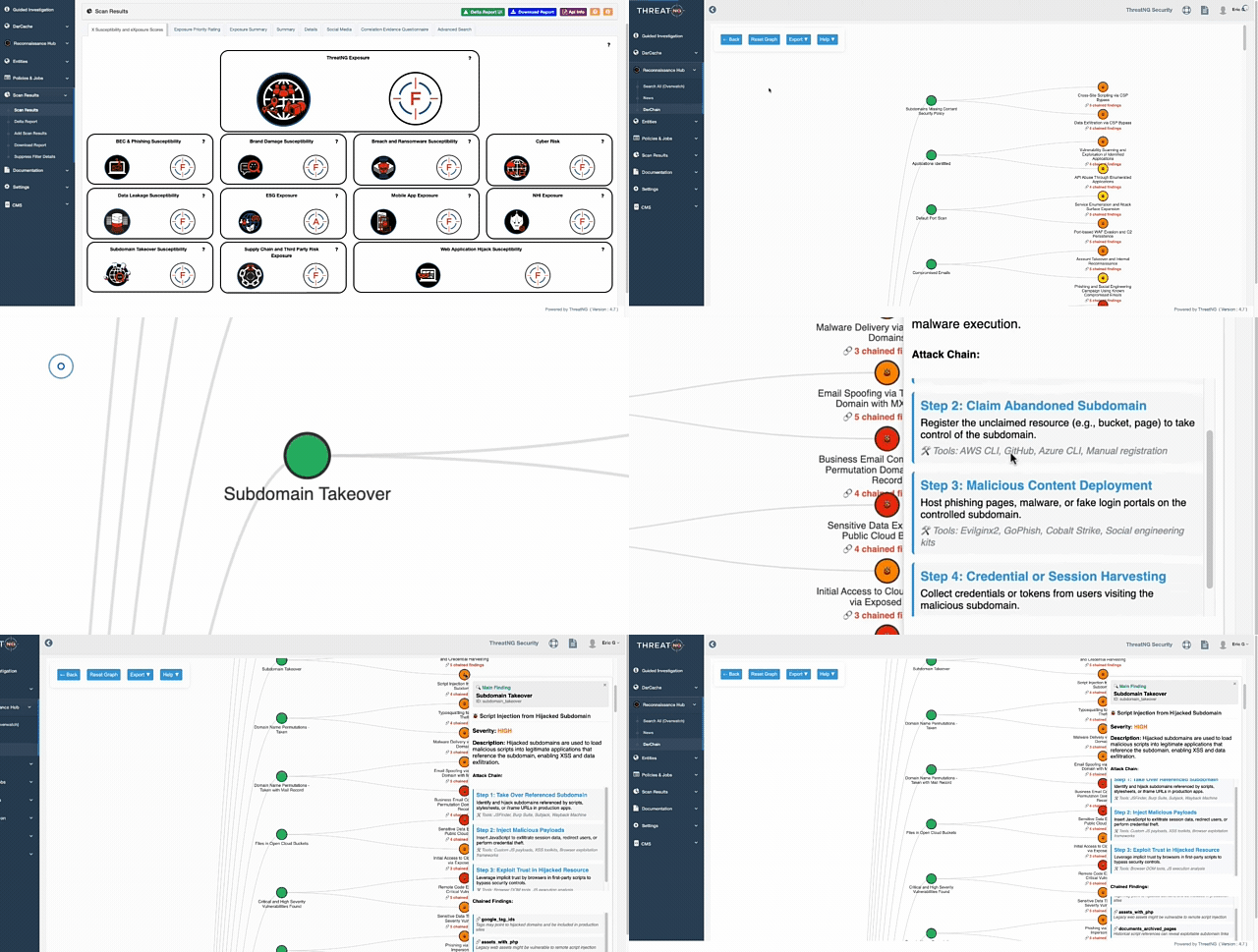
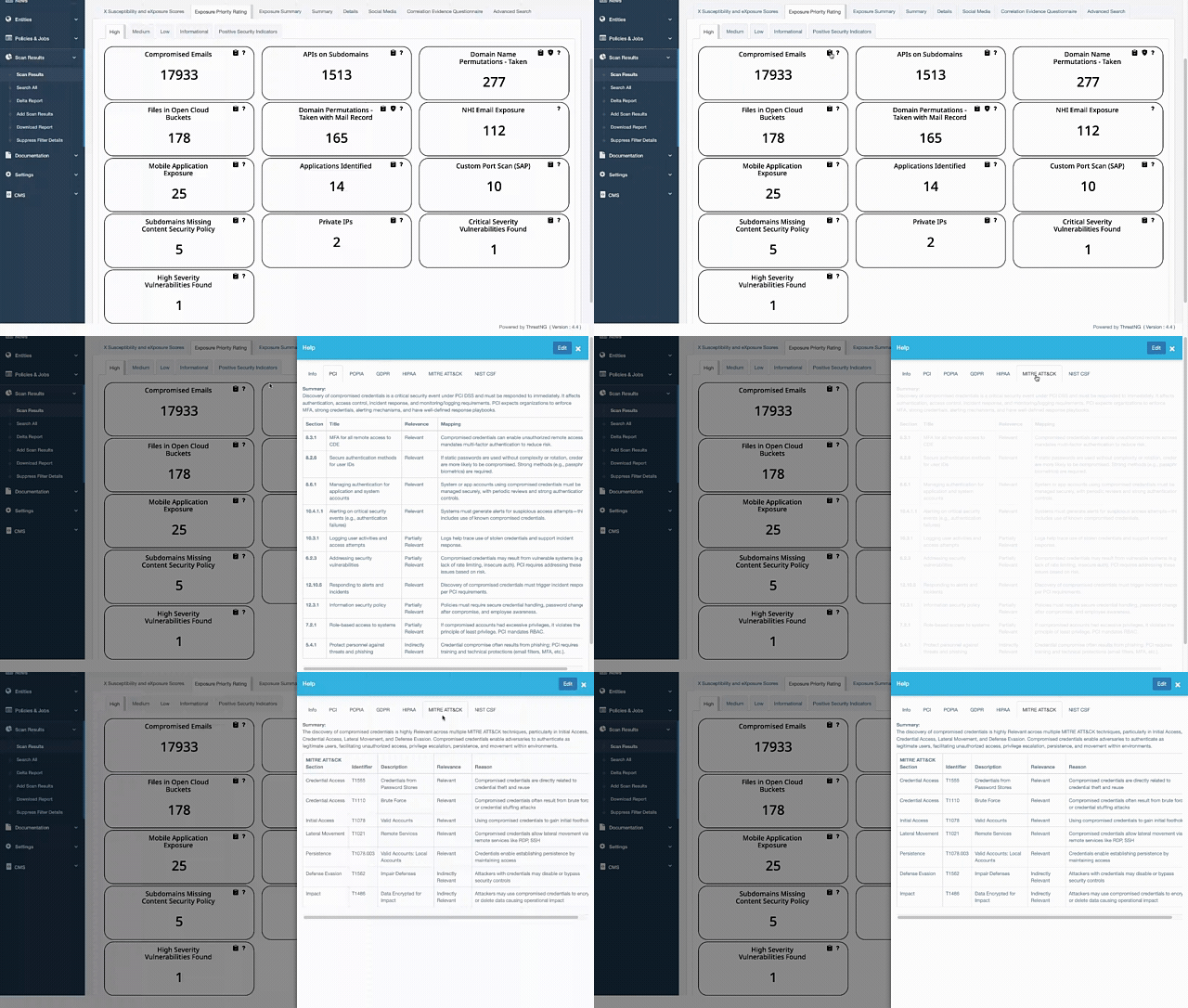
The ultimate goal of external intelligence is to enable efficient, defensible action. This benefit promises an operational structure that strategically focuses on remediation. ThreatNG accomplishes this by providing detailed reports (Executive, Technical, and Prioritized by High, Medium, Low) and by directly mapping findings to required GRC frameworks (PCI DSS, HIPAA, GDPR, NIST CSF).
When a third-party breach involving vendor-managed NHIs occurs, the clock starts ticking for regulatory reporting. By mapping external findings through DarChain Attack Path Intelligence, ThreatNG delivers the legal-grade attribution required to rapidly determine the blast radius. This verifiable proof is critical for confidently accelerating incident materiality determinations to meet strict mandates, such as the SEC Form 8-K four-day disclosure window, and demonstrating rigorous data protection under India’s DPDPA.
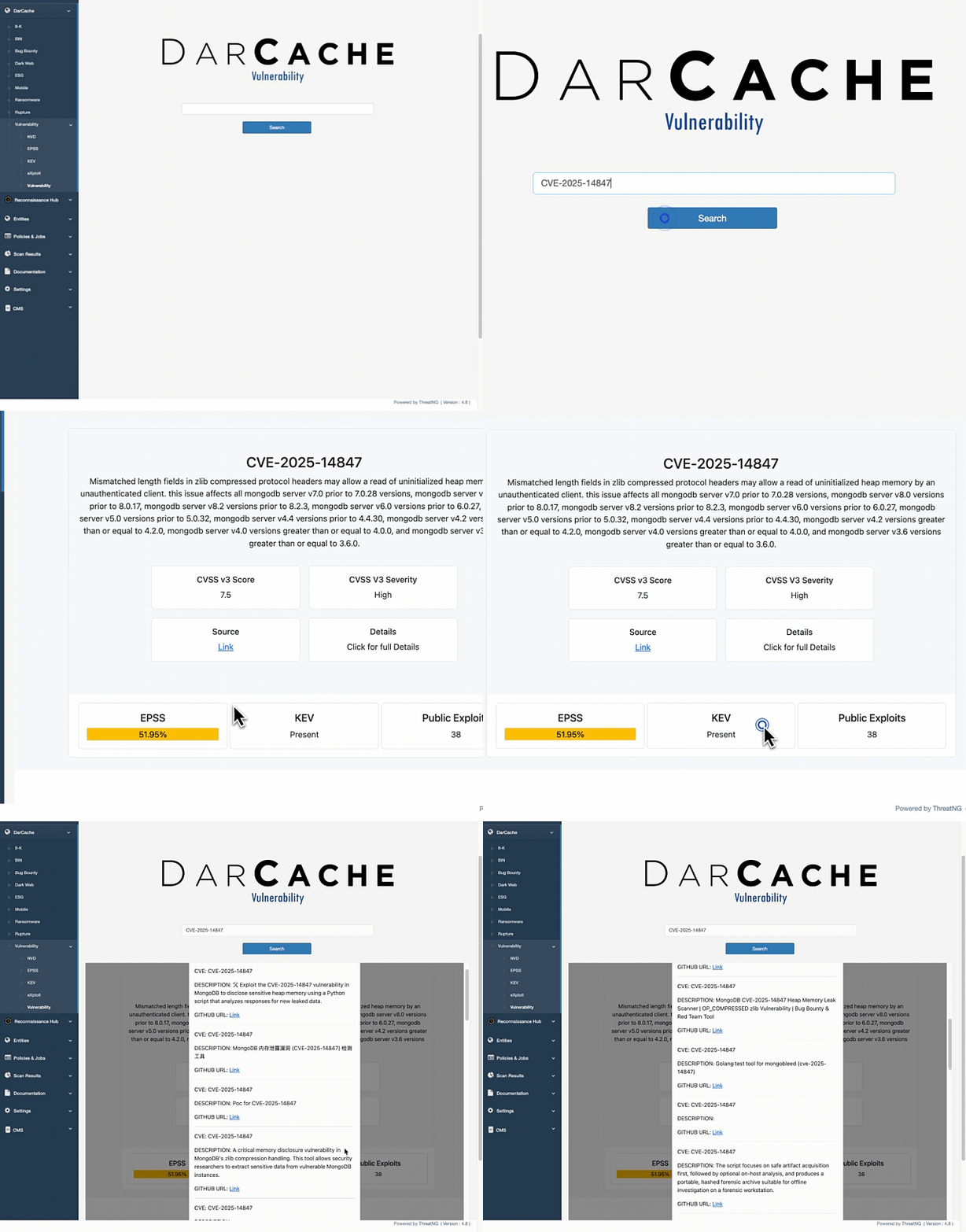
Strategic prioritization is powered by ThreatNG's Intelligence Repositories (DarCache). The DarCache Vulnerability data fuses technical severity (NVD scores) with critical intelligence on real-world exploitation:
KEV (Known Exploited Vulnerabilities): Confirms if an underlying technology associated with an NHI exposure is actively being exploited.
EPSS (Exploit Prediction Scoring System): Provides a probabilistic estimate of future exploitation likelihood.
Verified PoC Exploits: Links directly to public proof-of-concept exploits, enabling the security team to reproduce and mitigate risk more quickly.
This methodology allows security leaders to justify expenditures based not on abstract severity but on provable threat likelihood, ensuring that resources are allocated effectively. Furthermore, the External Adversary View feature and MITRE ATT&CK Mapping automatically translate raw findings, such as leaked credentials or exposed ports, into strategic narratives that show precisely how remediation prevents adversaries from using the techniques they use to achieve Initial Access and establish Persistence. By integrating the NHI Exposure Security Rating with the Cyber Risk Exposure rating, the solution demonstrates that directly and measurably mitigating specific NHI flaws (e.g., resolving missing DMARC and SPF records or eliminating exposed ports) improves the organization's overall external security posture.

Frequently Asked Questions (FAQ): ThreatNG Non-Human Identity (NHI) Exposure Security Rating
Threat Spotlight: Unmasking Non-Human Identity (NHI) Risk
-
The Non-Human Identity (NHI) Exposure Security Rating (A–F) is a quantifiable, continuous assessment of your organization's external attack surface risk related explicitly to machine identities. Non-human identities—such as API keys, service accounts, and system accounts —often possess high privileges and vastly outnumber human users, yet they are frequently mismanaged. This score is critical because NHIs are a prime attack vector, and a poor rating indicates a high susceptibility to breaches originating from externally exposed machine secrets. It provides a verifiable, objective measurement from the External Adversary View.
-
Traditional IAM and PAM solutions are designed to govern known, active identities within your internal network perimeter. They assume the credential is secure until internal monitoring flags an issue. In contrast, the ThreatNG NHI Rating focuses on leaked, forgotten, or shadow secrets that have accidentally escaped the perimeter into public forums, code repositories, or misconfigured cloud services. ThreatNG achieves this via Purely External Unauthenticated Discovery, meaning it assesses risk precisely as an attacker would—without requiring any internal connectors or credentials. This unique perspective is essential for mitigating external digital risk.
-
The NHI Exposure Security Rating holistically aggregates risk across major external exposure vectors. This includes discovering high-privilege machine identities via:
Sensitive Code Exposure: Hardcoded API keys (e.g., Stripe, AWS), private security keys (PGP, RSA), and tokens found in public code repositories and mobile apps.
Exposed Ports: Unmonitored, public-facing database ports (e.g., MongoDB Port 27017, Postgres Port 5432) or orchestration APIs (e.g., Kubernetes API Port 6443) that often authenticate via service accounts.
Cloud Exposure: Credentials or data stored in exposed open cloud buckets (AWS S3, Azure, GCP).
NHI Email Exposure: System-level email addresses (svc@, jenkins@, devops@, admin@) found in compromised credentials or public archives that can be weaponized for targeted attacks.
-
AI Agents operate autonomously, often requiring persistent API tokens to access data across different SaaS platforms. As organizations deploy more "Agentic AI," the number of unmonitored machine identities explodes. ThreatNG discovers where these agents may be inadvertently leaking their authentication tokens in public datasets or open prompt logs.
Value & Impact: Driving Efficiency and Executive Mandate
-
The Contextual Certainty Deficit refers to the crisis of ambiguity security teams face when an external threat is discovered but lacks decisive context, making it impossible to confirm if the finding is factual, what the impact is, and who is responsible. ThreatNG eliminates this crisis using the patent-backed Context Engine™. This engine utilizes Multi-Source Data Fusion to correlate the technical exposure with legal and operational context, resulting in Legal-Grade Attribution. This provides irrefutable proof, transforming ambiguous noise into an actionable mandate for remediation.
-
Ambiguity forces highly paid security analysts to spend days manually investigating and validating exposed credentials, a process we call the Hidden Tax on the SOC. By providing Legal-Grade Attribution instantly alongside the finding, ThreatNG allows the SOC to skip this lengthy, costly investigative cycle. Remediation efforts are accelerated, risk mitigation is instant, and resources are allocated based on verified, objective evidence, leading to a substantial reduction in operational drag and total cost of ownership.
-
The NHI Rating provides a governance framework by translating technical exposures into executive risk narratives.
Compliance: Findings are automatically mapped to critical GRC frameworks, including PCI DSS, HIPAA, GDPR, and NIST CSF, allowing you to identify and proactively close external compliance gaps. This makes the NHI rating an External GRC Assessment solution.
Adversarial Alignment: All NHI exposures are correlated with MITRE ATT&CK techniques, with explicit focus on Initial Access and Persistence. This demonstrates to the board exactly how an attacker would leverage the exposure, helping justify strategic security investments based on real adversarial intent.
Regulatory Avoidance: By providing continuous monitoring, the solution helps preempt high-consequence incidents that could otherwise trigger mandatory public disclosures, such as an SEC Form 8-K filing.
-
True Zero Trust mandates "Continuous Verification," yet most organizations only audit internal logs. ThreatNG provides the missing External Validation Loop required by frameworks like NIST 800-207, SOC 2, and ISO 27001.
The Evidence: It proves to auditors that your "Zero Standing Privilege" policies are working by verifying that no "Shadow" or "Zombie" identities are visible to attackers on the public web.
The Outcome: This transforms compliance from a static policy document into dynamic, evidence-based assurance that your attack surface is sealed.
-
The rapid adoption of Agentic AI and automated workloads means machine identities are expanding exponentially. Traditional per-asset or per-user pricing models make monitoring this specific risk cost-prohibitive. ThreatNG solves this with an entity-centric licensing model, charging strictly per pairing of a domain and organization name. This allows for unlimited asset and NHI discovery within the defined entity, ensuring you can continuously monitor your evolving perimeter with absolute budget predictability, without incurring financial penalties for operational growth.
Technical Advantage: Purely External Discovery
-
No. The foundation of the NHI Exposure Security Rating is Purely External Unauthenticated Discovery. The platform operates entirely outside your network, mimicking the reconnaissance and exploitation techniques used by an external attacker. This ensures that the risk score you receive is an objective reflection of your true External Adversary View and does not rely on any internal system configuration or connectivity.
-
This occurs when your internal software relies on external code packages that have been compromised. If a developer accidentally exposes an internal package name in a public repository, attackers can register a malicious public package with the same name (Typosquatting). ThreatNG identifies these dependency risks, preventing attackers from injecting malicious code that steals your machine credentials.
-
A "Zombie" Identity is a service account or API key that was disabled internally but remains visible in external historical data (like old Git commits or archived web pages). Sophisticated attackers harvest these to find patterns or re-use credentials on backup systems that may not have synced with the de-provisioning event. ThreatNG identifies these historical artifacts before they can be weaponized.
Supply Chain and Third-Party Risk
-
ThreatNG acts as an external auditor by performing passive, non-intrusive discovery on your vendors using Open Source Intelligence (OSINT) techniques. Just as a hacker would, the platform scans public code repositories, open cloud buckets, and mobile app stores for "digital exhaust" linked to your vendor’s domain.
The Specific Capability: It detects if their developers have accidentally hardcoded your API keys, tokens, or credentials in their public-facing assets.
The Result: You get a quantifiable NHI Exposure Security Rating based on empirical evidence, allowing you to assess their security posture immediately—no agents, logins, or permissions required.
-
Yes. ThreatNG transforms Vendor Due Diligence from a subjective questionnaire into an objective, data-driven assessment.
Trust, but Verify: Instead of relying solely on a vendor’s promise that they follow secure coding practices, you can use ThreatNG to verify their "Identity Hygiene" before signing a contract.
Negotiation Leverage: If the scan reveals historical leaks or "Zombie Identities" (deprecated but still visible credentials), you have concrete data to demand remediation or stronger contractual liability clauses regarding data handling.
Go/No-Go Decision: It ensures you do not grant ecosystem access to a partner who is already leaking the keys to the kingdom.

Security Ratings Use Cases
ThreatNG is a security rating platform enabling businesses to evaluate and monitor their security posture and that of their third-party vendors. By leveraging our extensive security information database, ThreatNG provides valuable insights into potential vulnerabilities and risk exposure, enabling organizations to take proactive measures to strengthen their security defenses. This section will explore some use cases where ThreatNG's security ratings can help organizations better understand their security posture and mitigate risk.